Drupal 7 EOL
What does the end of life of Drupal 7 mean for your project?


Last updated: April 2026
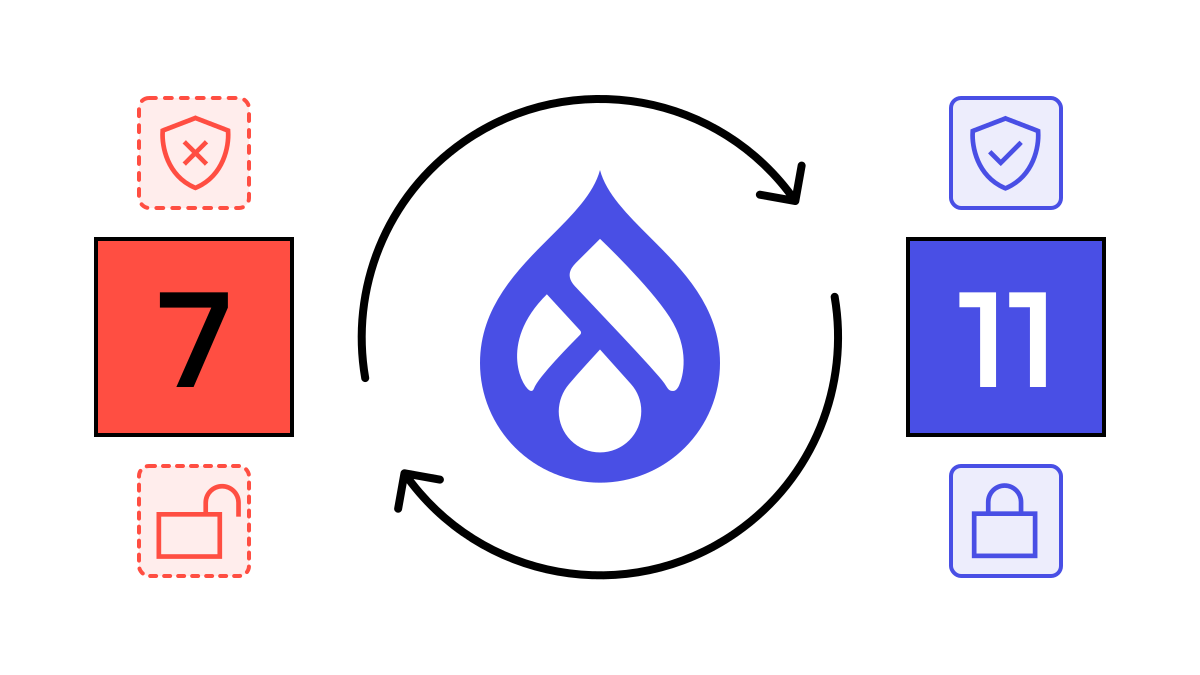
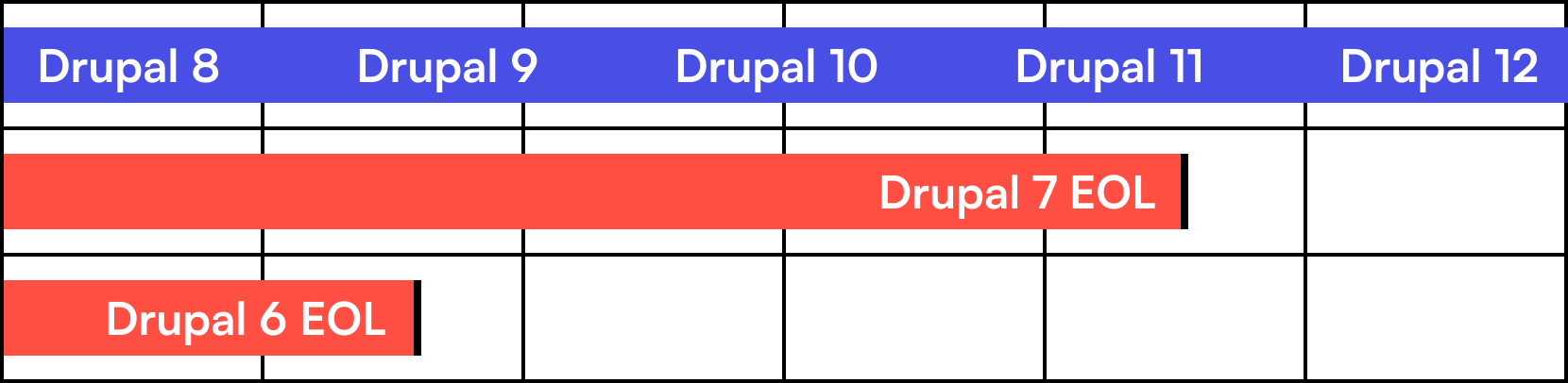
On 5 January 2025, Drupal 7 reached its official end of life (EOL). Since then there have been no security updates, no bug fixes, and no community support. If you are still running a Drupal 7 website, now is the time to act.
Contents
➥ What does a migration look like?
➥ How long does a migration take?
What does EOL mean?
Every software product has a lifecycle. At the end of that lifecycle is “end of life” (EOL) – from this date the vendor no longer provides support. For Drupal 7 this means concretely: no updates, no security patches, no official assistance from the Drupal community.
What are the risks since support ended?
1. Growing security vulnerabilities
Since January 2025, newly discovered security vulnerabilities in Drupal 7 are no longer patched. Attackers know these weaknesses – and actively exploit them. Every additional month without migration increases the risk of a successful attack.
2. Technical obsolescence and hosting issues
Drupal 7 no longer receives adjustments for current PHP versions. It does not run reliably on PHP 8.x – many hosting providers have already discontinued PHP 7.x or have announced an end to support. This causes compatibility problems and makes integrations with external services increasingly difficult or impossible.
3. GDPR and compliance risks
A system without security updates increases the risk of data breaches. If personal data is processed on an unpatched Drupal 7 installation, a successful attack can lead to GDPR violations – with significant fines and reputational damage.
4. Rising maintenance effort
The number of service providers specialising in Drupal 7 is shrinking rapidly. Anyone still running Drupal 7 pays significantly more for maintenance and support – with a smaller market and a growing risk profile.
What about Extended Security Coverage?
Providers such as HeroDevs and Tag1 offer commercial security updates for Drupal 7 – the so-called Extended Security Coverage (ESC) or D7ES program. This can be a short-term bridge for organisations that need more time to migrate. It is not a long-term solution, however: ESC neither solves the PHP compatibility issues nor closes technical debt. The longer you wait, the more complex and costly the eventual migration becomes.
What should you do now?
The clear recommendation: migrate to Drupal 10 or Drupal 11 now. The longer you wait, the greater the security risks and the higher the effort, as the technical gap continues to widen.
Drupal 10 or Drupal 11 – which is the right choice?
Both versions are actively supported. The decision depends on your project:
| Drupal 10 | Drupal 11 | |
|---|---|---|
| Supported until | November 2026 | approx. 2028 |
| PHP requirement | 8.1+ | 8.3+ |
| Maturity | Very stable, broadly tested | Modern stack, latest features |
| Recommendation | Conservative projects, short runtime | New projects, long-term planning |
For most new migration projects we recommend going straight to Drupal 11 – the upgrade path from Drupal 10 to 11 is significantly easier than earlier version jumps.
Migration, not upgrade
Drupal 7 offers no direct upgrade path to newer versions. That was a key reason support was extended for years – and it is the reason migration must now be planned and executed in a structured way.
A move to Drupal 10 or 11 covers two core areas:
- Rebuilding the business logic: Custom functionality and adaptations have to be transferred to the new architecture. Because Drupal 7 and later versions differ fundamentally, a complete rebuild is often required.
- Data migration: Content, user accounts, and database structures are transferred to the new version, with adjustments for the new data model.
What does a migration look like?
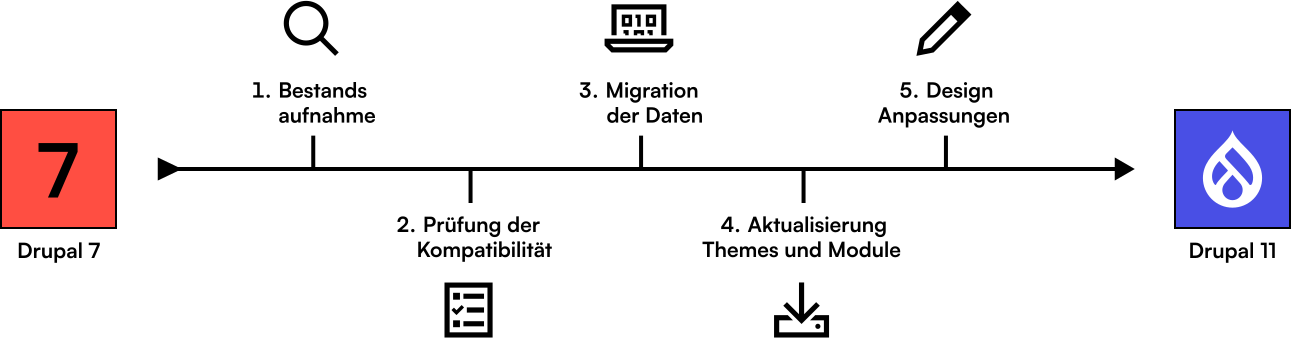
A typical migration from Drupal 7 to Drupal 10 or 11 follows these steps:
- Inventory: Analysis of existing content, modules, and customisations, plus a compatibility check with the target version.
- Fresh installation: Setting up a clean Drupal 10/11 environment.
- Data migration: Moving content and user data into the new database structure.
- Theme and modules: Rebuilding or updating themes and custom modules for the new architecture.
- Design: Migrations are often used as an opportunity for design improvements – for example in the area of accessibility. Our in-house design team supports you here.
- Testing and launch: Comprehensive QA, setting up 301 redirects for SEO, and the final launch. For complex projects we rely on AI-supported testing that accelerates regression testing and safeguards quality.
How long does a migration take?
The timeframe depends heavily on the complexity of your existing site:
- Simple content website (few modules, standard theme): 2–4 months
- Mid-sized website (multiple custom modules, individual features): 4–9 months
- Complex enterprise website (extensive custom logic, integrations, large data volume): 9–18 months
Starting early pays off – the more time you allocate, the more carefully and risk-free the migration can be carried out.
No similar problem with Drupal 12
Since Drupal 8 (2015) the release model has fundamentally changed. New major versions build on each other – an upgrade from Drupal 10 to 11 is significantly easier than the jump from Drupal 7. The “one-time big problem” with Drupal 7 will not repeat itself.
Conclusion
The Drupal 7 end of support is no longer a future threat – it is the present. Every week a Drupal 7 site stays online unpatched increases security risk, GDPR exposure, and the eventual migration effort.
We recommend starting to plan now: an early migration secures your data, protects your users, and enables a controlled transition to a modern, future-proof platform.
Does keytec take on migration projects?
Yes. With over 15 years of Drupal experience and more than 300 completed Drupal projects, we have extensive experience with migrations of all sizes – from compact content websites to complex enterprise platforms. As a Drupal Association Certified Partner we support you on the technical side, with design, and with the complete redesign of your project.
Frequently asked questions about Drupal 7 migration
Do I have to migrate directly to Drupal 11, or can I go to Drupal 10?
Both versions are possible. Drupal 10 is supported until November 2026; Drupal 11 is the more modern base for long-term projects. For new migration projects we generally recommend going straight to Drupal 11.
What happens if I do nothing?
Your site stays online, but it becomes increasingly vulnerable. Security gaps go unpatched, hosting providers drop PHP 7.x, and the effort for a later migration keeps rising.
Can I just hire an Extended Security Support provider?
ESC is a short-term bridge, not a permanent solution. Security patches are delivered, but PHP compatibility, growing technical debt, and the missing community ecosystem remain unsolved.
What does a Drupal 7 migration cost?
That depends directly on the complexity of your site. For an initial estimate, get in touch – we analyse your existing solution and give you a realistic effort projection.
Do you need support with the update?
Thanks to our specialized Drupal services we have successfully completed many migration projects. We accompany you on the technical side with Drupal development and on the design side. With a Drupal audit we clarify the migration scope upfront.
Contact us and let's start your update process.

This might also interest you



Do you want to develop sustainable digital projects?